
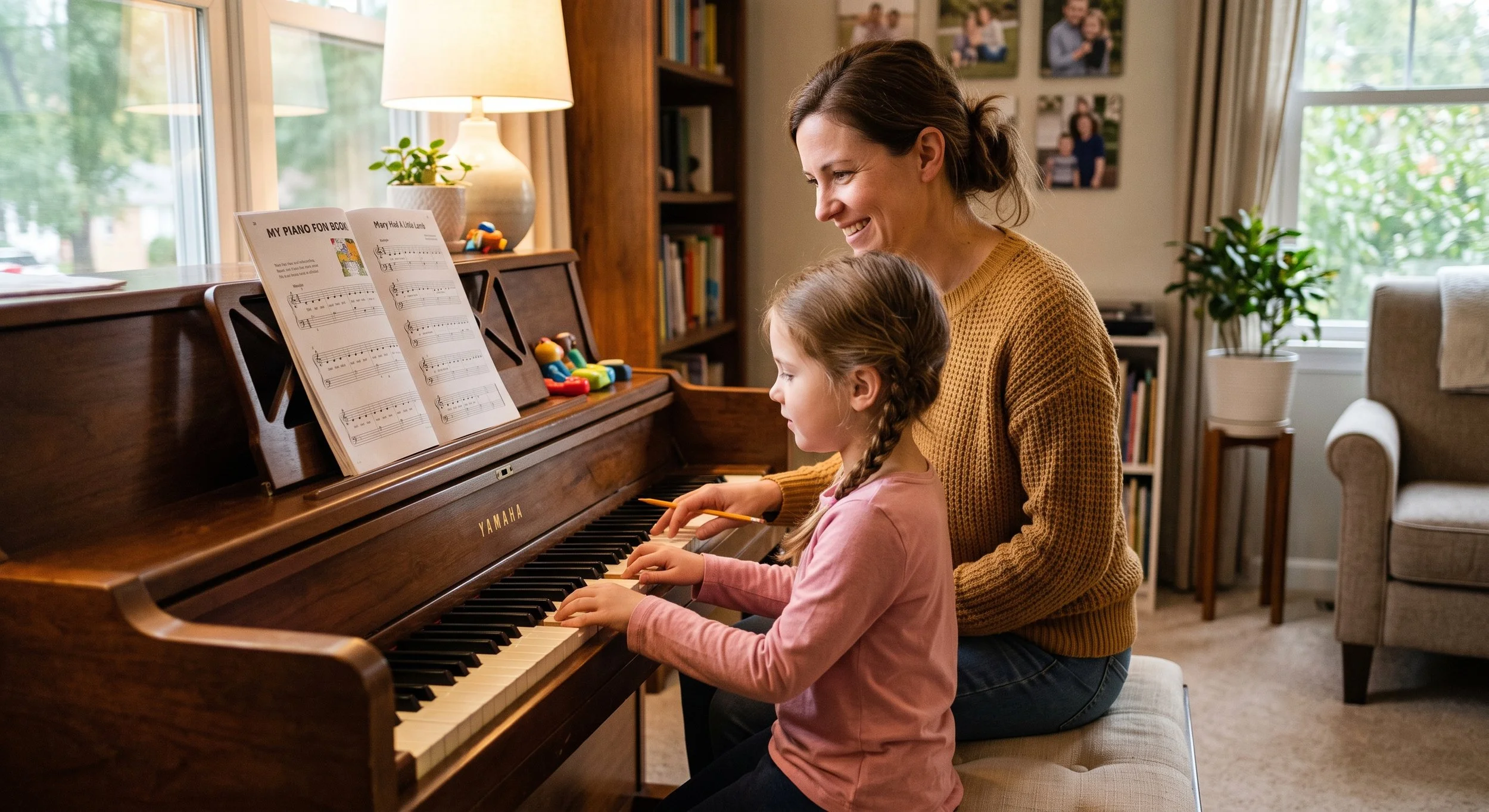
At Volo Academy of Music, we believe music education is a collaborative journey between student, teacher, and family. As a parent, you don’t need to be an accomplished pianist or know how to read complex sheet music to guide your child. Your presence, encouragement, and structure make all the difference.
Here is how you can set your child up for musical success, turn practice into a positive bonding ritual, and nurture lifelong discipline along the way.
1. Anchor Practice into a Daily Routine
Consistency is the secret ingredient to musical progress. Young children thrive on predictability, and establishing a set practice slot each day removes the daily friction of negotiation.
Pick a consistent anchor: Rather than asking, “Do you want to practice now?”, tie piano time to an existing daily habit—for instance, 15 minutes right after an afternoon snack, or just before dinner.
Keep sessions short and focused: For beginners, 10 to 20 minutes of daily, focused practice is far more effective than a rushed 45-minute cram session the night before their next lesson.
When piano practice becomes as routine as brushing teeth, it stops feeling like a chore and simply becomes part of their day.
2. Create a Dedicated, Distraction-Free Music Space
Practice requires concentration, especially as young minds learn to read notation, track finger positions, and count rhythms all at once.
Clear the visual noise: Ensure the instrument area is well-lit, uncluttered, and away from high-traffic household chaos.
Mute the devices: Turn off TVs, silence phones & background media in the room.
Set up for comfort: Check that their bench height is adjusted correctly and their sheet music or tablet is securely propped at eye level.
A calm environment signals to your child that this is a special, focused time set aside just for music.
3. Be Present and Follow the Teacher’s Weekly Notes
For young beginners, sending them off to practice alone in another room can feel isolating and overwhelming. Being present transforms practice from solitary work into an engaging, shared activity.
Use the lesson notes as your roadmap: Your teacher outlines clear objectives each week. Sit down with your child, open the teacher’s notes or practice log, and walk through the assignments together step by step.
Break tasks into bite-sized goals: Instead of asking them to “play the song three times,” focus on specific targets from the notes, such as: “Let’s focus on curving our fingers this time!” or make it engaging, like, “You play and I clap along this time!”
4. Balance Warm Encouragement with Gentle Correction
The way you give feedback at the piano shapes your child's confidence and resilience.
Celebrate the Wins
Praise the process and effort, not just perfection. When your child remembers a tricky fingering, keeps a steady tempo, or notices an accidental on their own, point it out with enthusiasm:
“I loved how focused you were on keeping your fingers curved that time!”
Correct Gently—and Repeat Until It Clicks
Mistakes are a natural, necessary part of learning music. If your child plays a wrong note or rushes through a rest:
Pause without frustration: Guide them gently back to the teacher’s instructions.
Isolate the measure: Rather than restarting the piece from the very beginning, have them play just the single tricky measure slowly.
Repeat for muscle memory: Encourage them to play the corrected section a couple of times correctly so the brain and hands internalize the right movement.
Ending a practice session on a successful repetition builds a lasting sense of accomplishment.
5. Reframe Practice as Daily Bonding Time
In our fast-paced daily schedules, it can be hard to find uninterrupted one-on-one time with your child. Piano practice offers a built-in opportunity to connect without phones or external distractions.
Cheer on their progress, ask them to teach you what a musical symbol means, or simply sit beside them and enjoy listening. When practice feels like quality time spent together, children naturally associate the piano with warmth, attention, and security.
6. Remember: A Dip in Motivation Is Completely Normal
If your child occasionally resists sitting down at the bench, take a breath—this is entirely normal.
Not every child (or adult!) feels inspired every single day. Learning an instrument takes real cognitive effort, and pushing through plateaus can sometimes feel challenging.
When motivation dips, remember the bigger picture:
Normalize the feeling: Acknowledge that learning new skills takes patience: “It’s okay if this piece feels tough today; learning new things is hard work.”
Focus on habit over mood: Showing up even when you don't feel 100% inspired teaches children the foundation of self-discipline.
Skills that last a lifetime: The resilience, attention to detail, and patience cultivated at the piano transfer directly to academics, athletics, and everyday problem-solving.
By gently holding the boundary and helping them show up, you are giving them tools that reach far beyond the music stand.
Ready to Begin Your Child's Musical Journey?
Whether your child is taking their first steps at the piano or looking to build confident, structured practice habits, having the right guidance makes all the difference.
At Volo Academy of Music, our experienced instructors specialize in providing engaging, personalized lessons designed to inspire young musicians and support families every step of the way.
[Explore Piano Lessons at Volo Academy of Music] today to schedule an introductory lesson and discover how joyful learning can be.